A North Queensland Women’s Legal Service, James Cook University and Be Conscious collaboration.
Domestic Violence & dental professionals: a legal guide
Responding to domestic & sexual violence in dental practice
A practical guide for dental professionals
Dental professionals are uniquely positioned to identify and respond to domestic and sexual violence.
While injuries to the head, face, mouth and neck are common in victim-survivors, abuse is not always physical. Patients experiencing domestic and sexual violence may also present with signs of coercive control, intimidation, emotional abuse, financial abuse, social isolation, or controlling behaviours that affect their ability to make decisions about their health and wellbeing.
Yet many practitioners report feeling uncertain about how to recognise these signs or what to do next.
This practical guide has been developed to help dental professionals recognise both physical and non-physical forms of domestic and sexual violence, respond safely and ethically, understand their legal obligations, and connect patients with appropriate support.
Developed through a unique collaboration between experts in dentistry, social work and law, this resource combines evidence-based practice, trauma-informed care, and practical legal guidance for real-world clinical settings.

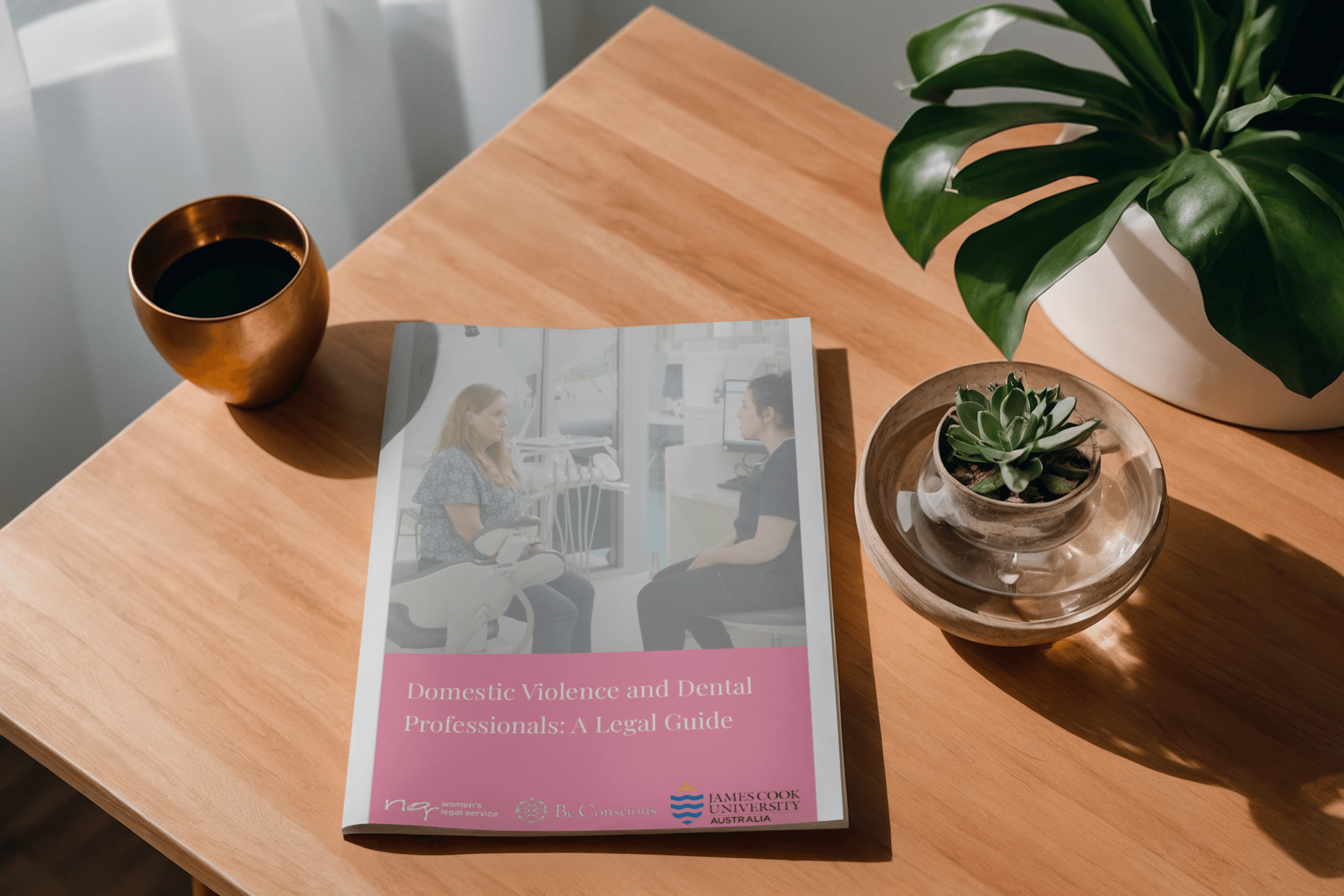
WHAT’S INCLUDED?
Decision pathway infographic
A quick-reference visual guide to help dental professionals identify concerns, assess next steps, and respond safely and appropriately.
Quick decision guide
A concise, practical resource designed for busy clinicians, covering:
Recognising indicators of abuse
Responding to disclosures
Documentation considerations
Referral pathways
Trauma-informed communication
Comprehensive legal guide
A practical, trauma-informed resource about recognising and responding to signs of domestic and family violence in a dental setting, including:
consent and decision-making capacity
documentation and clinical record-keeping, including the role of dental records as potential evidence
privacy, reporting obligations, and the limits of confidentiality, including information-sharing frameworks
recognising coercive control and high-risk indicators
risk assessment and patient safety
referrals and collaboration with specialist domestic and family violence services.
Together, these three resources provide both immediate clinical guidance and deeper professional understanding.
WHY THIS RESOURCE MATTERS
Domestic and sexual violence affects people from every background, profession and community.
While physical injuries to the head, face, mouth and neck are common in victim-survivors, abuse is not always visible. Many people experiencing domestic and sexual violence may present with signs of coercive control, emotional abuse, psychological distress, social isolation, financial abuse, fearfulness, anxiety, missed appointments, or a partner who insists on speaking on their behalf.
Dental practitioners may be among the first professionals to identify both physical and non-physical indicators of abuse, placing them in a unique position to respond safely and supportively.
This guide aims to build confidence, increase safety, and support better outcomes for victim-survivors.
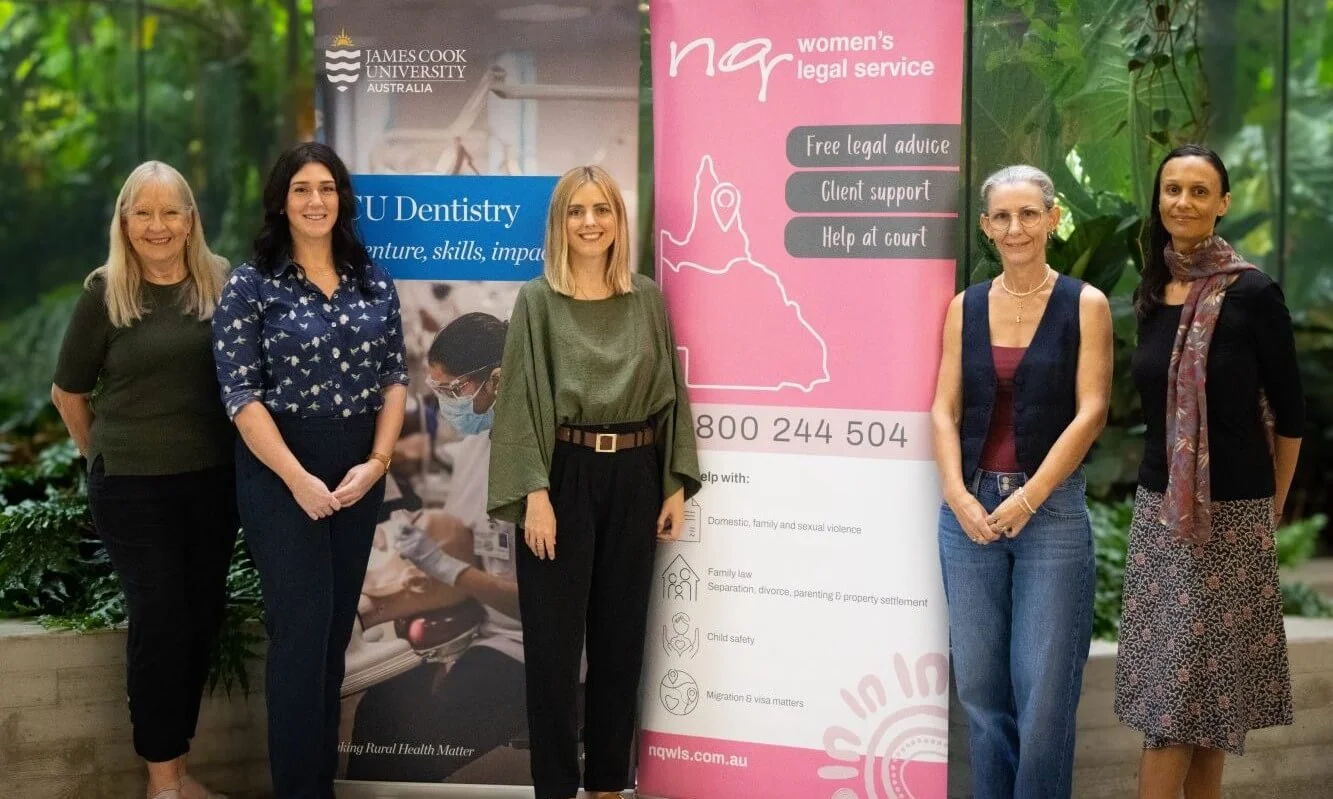
Dr Felicity Croker, Dr Alex Dancyger, Ashleigh Lawrence, Dr Ann Carrington and Simone Dewar.
DEVELOPED BY EXPERTS
This guide was developed through a multidisciplinary partnership bringing together expertise from:
Dentistry
Domestic and family violence practice
Social work
Law
Trauma-informed care
The result is a resource that is clinically relevant, legally accurate, and grounded in the realities faced by victim-survivors.
YOUR PURCHASE MAKES A REAL DIFFERENCE
A woman experiencing severe domestic and family violence sought assistance after fleeing interstate and becoming separated from her children. English was her second language, and years of coercive control, physical violence, financial abuse, and isolation had left her feeling unheard and disbelieved. Her ex-partner had threatened to kill her on a number of occasions, and she also described numerous physical assaults.
With support from North Queensland Women's Legal Service, she obtained a protection order, received legal advice, and was connected with a range of support services. NQWLS also assisted her to access legal representation in interstate parenting proceedings concerning her children.
As part of her recovery, the woman sought treatment through the James Cook University Dentistry Clinic for dental issues linked to the violence she had experienced. Her story highlights how domestic and family violence can affect every aspect of a person's life, including their health, wellbeing, family relationships, and access to justice.
This case demonstrates the importance of a coordinated, trauma-informed response. Legal, health, and community services each played a role in helping this woman rebuild her life, access support, and have her voice heard.
Purchase the guide
Equip yourself and your team with practical tools to recognise, respond to and support patients experiencing domestic and sexual violence.
All profits from the sale of this guide directly support the work of North Queensland Women's Legal Service.
Every purchase helps us provide free legal advice, advocacy, education and support to women experiencing domestic, family and sexual violence.